Patient results · Featured case
Deep plane facelift
Deep neck lift
Submandibular gland resection
Surgeon: Dr. Khaled O. Alameddine · Coral Gables, Miami
In her words
Facelift patient testimonial · 2:33 · Captioned
Front · Smiling
6 views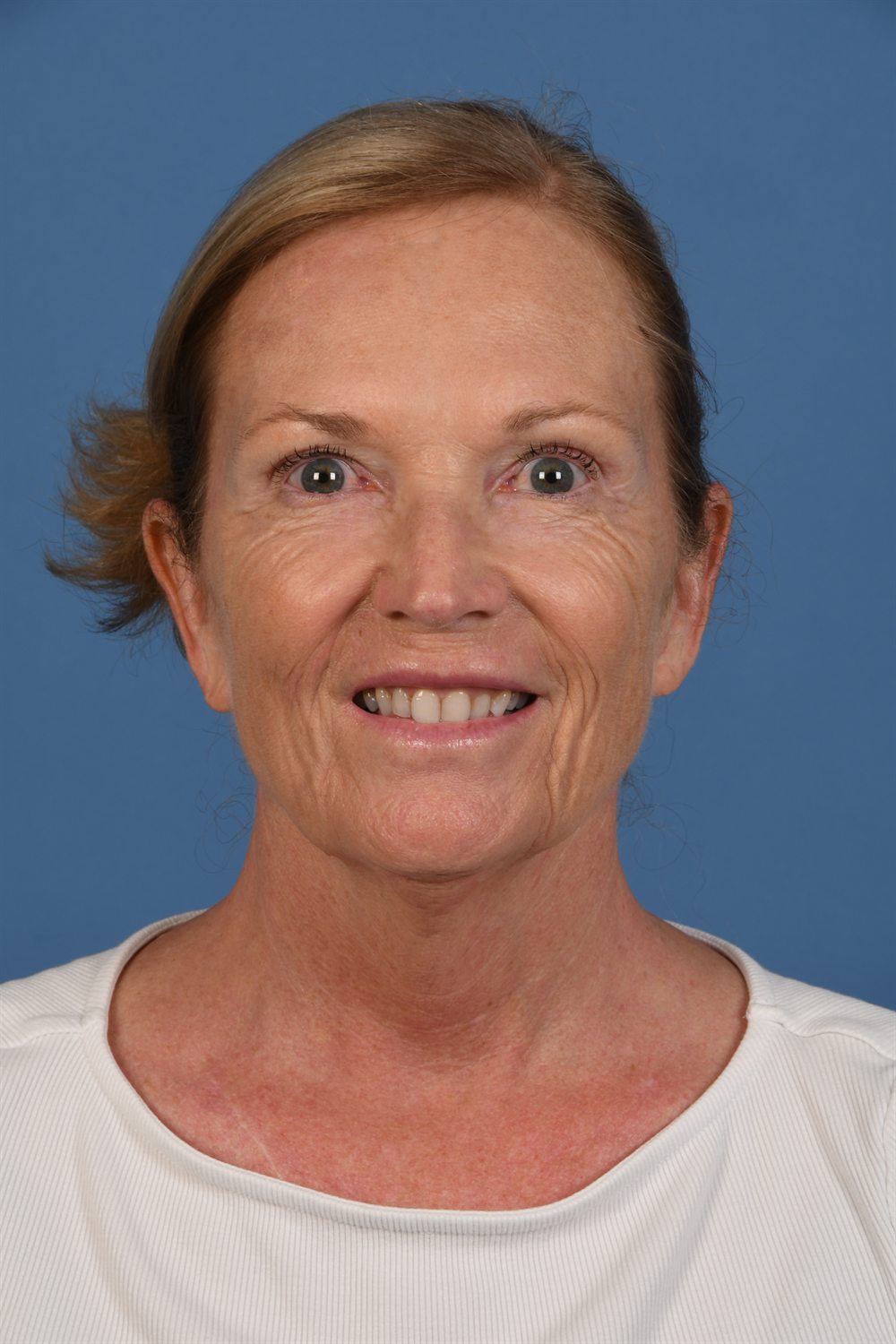

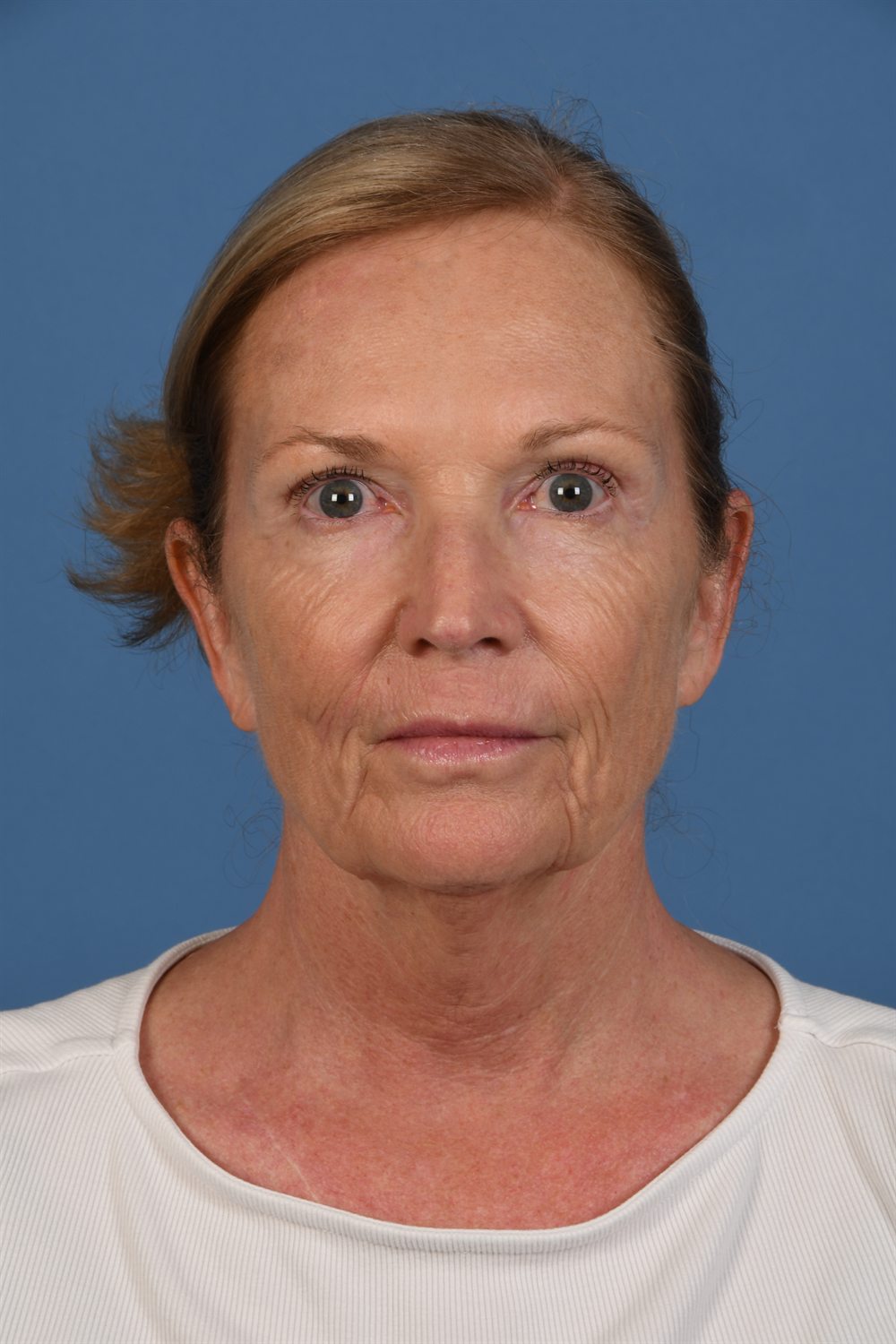
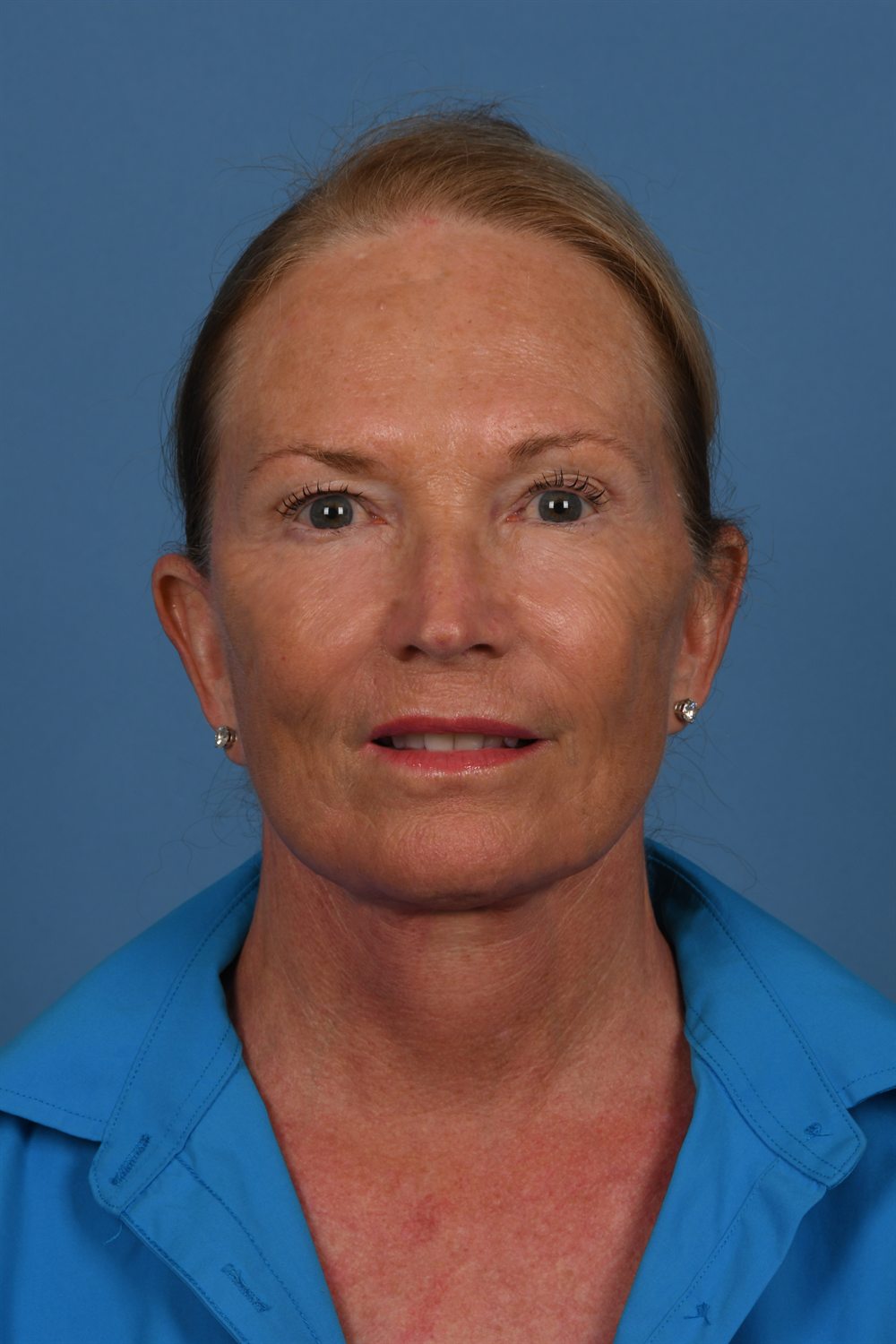
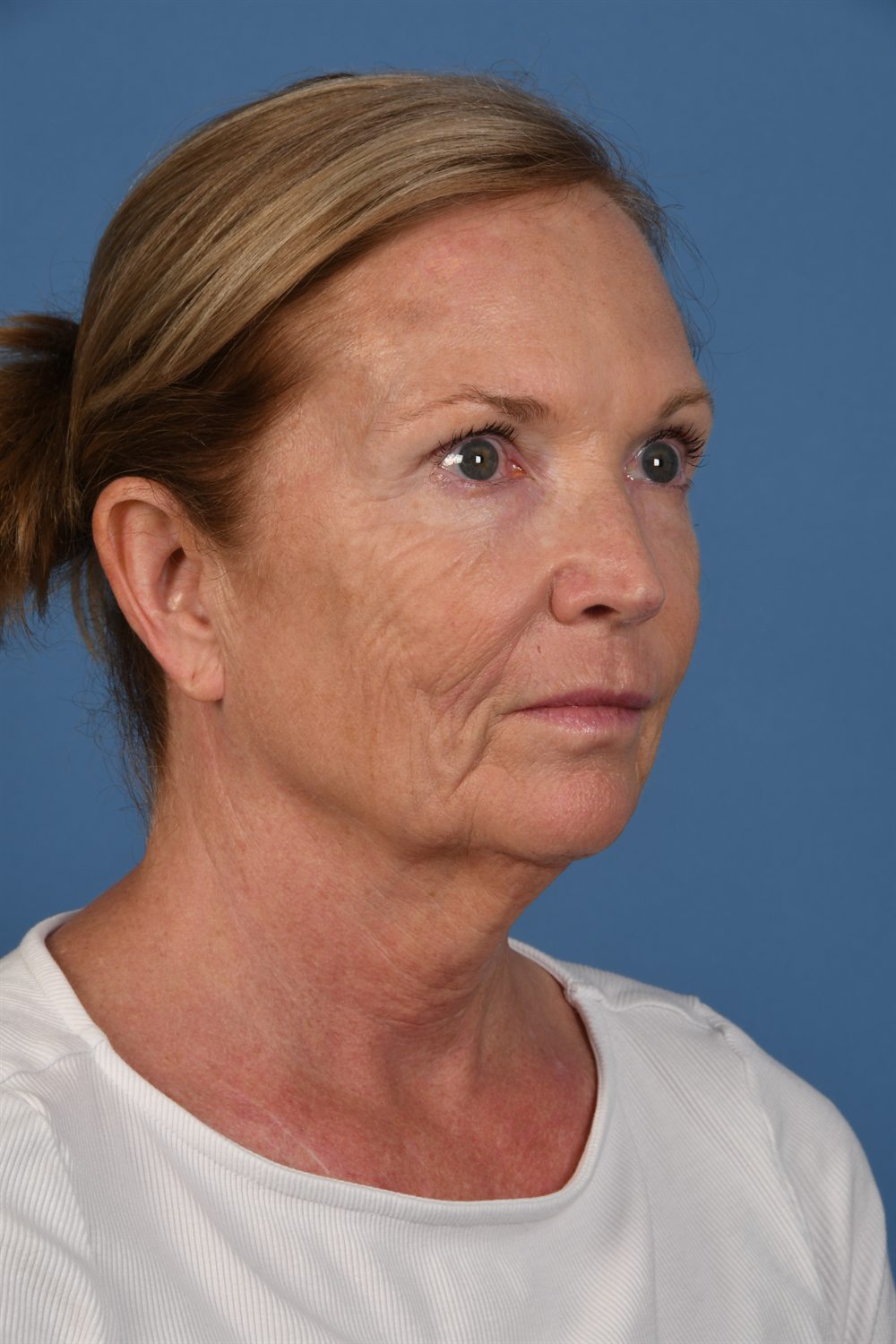
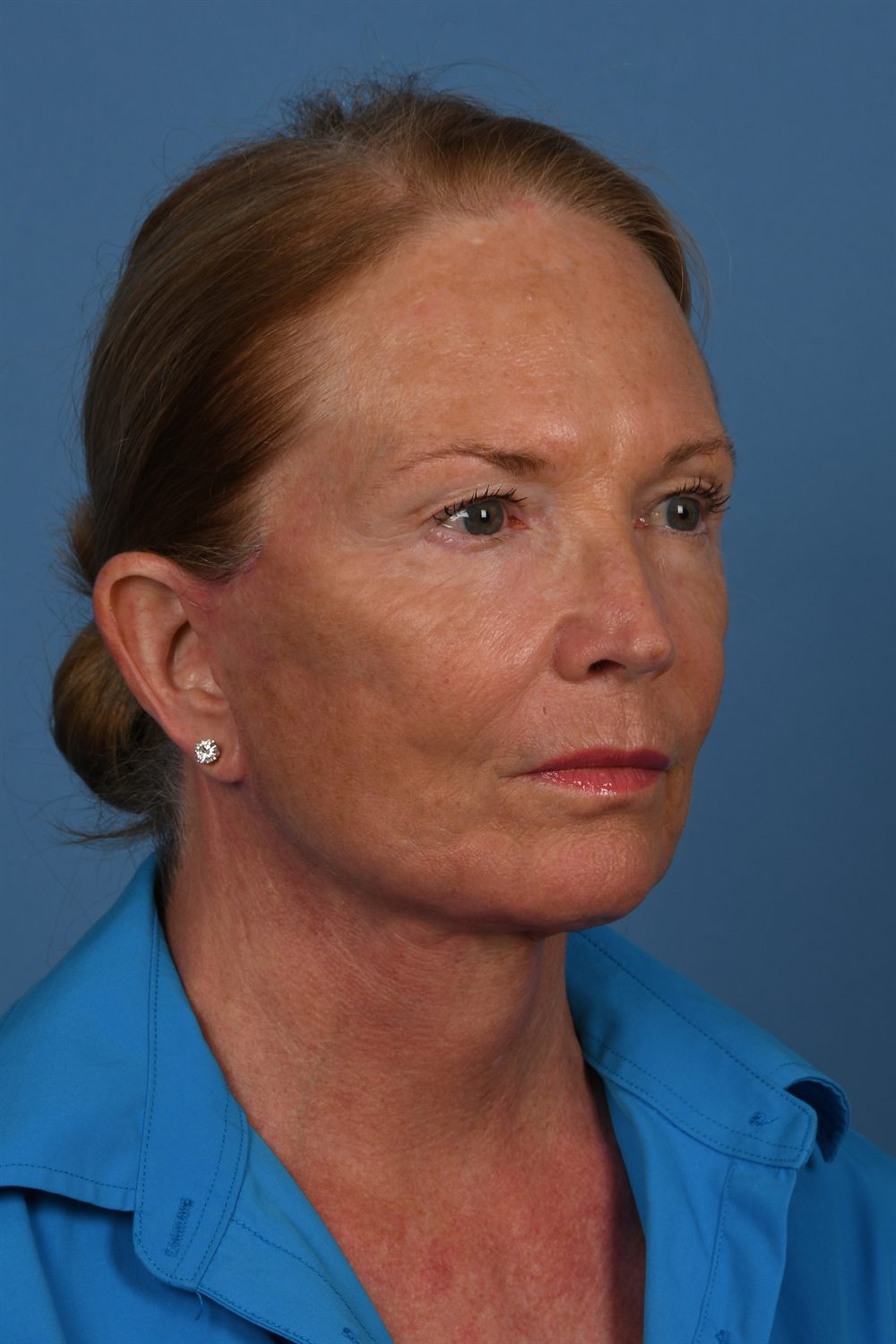
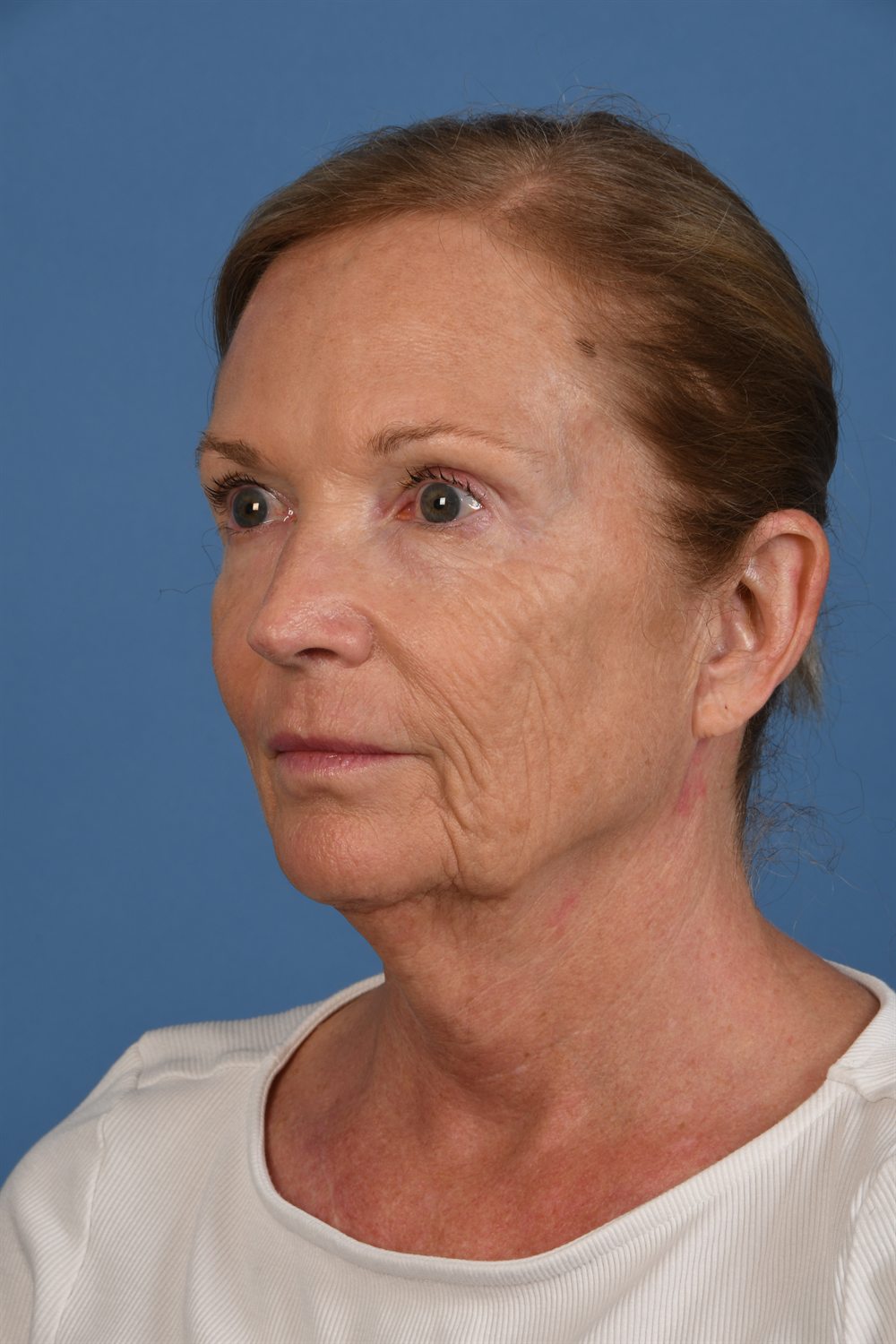
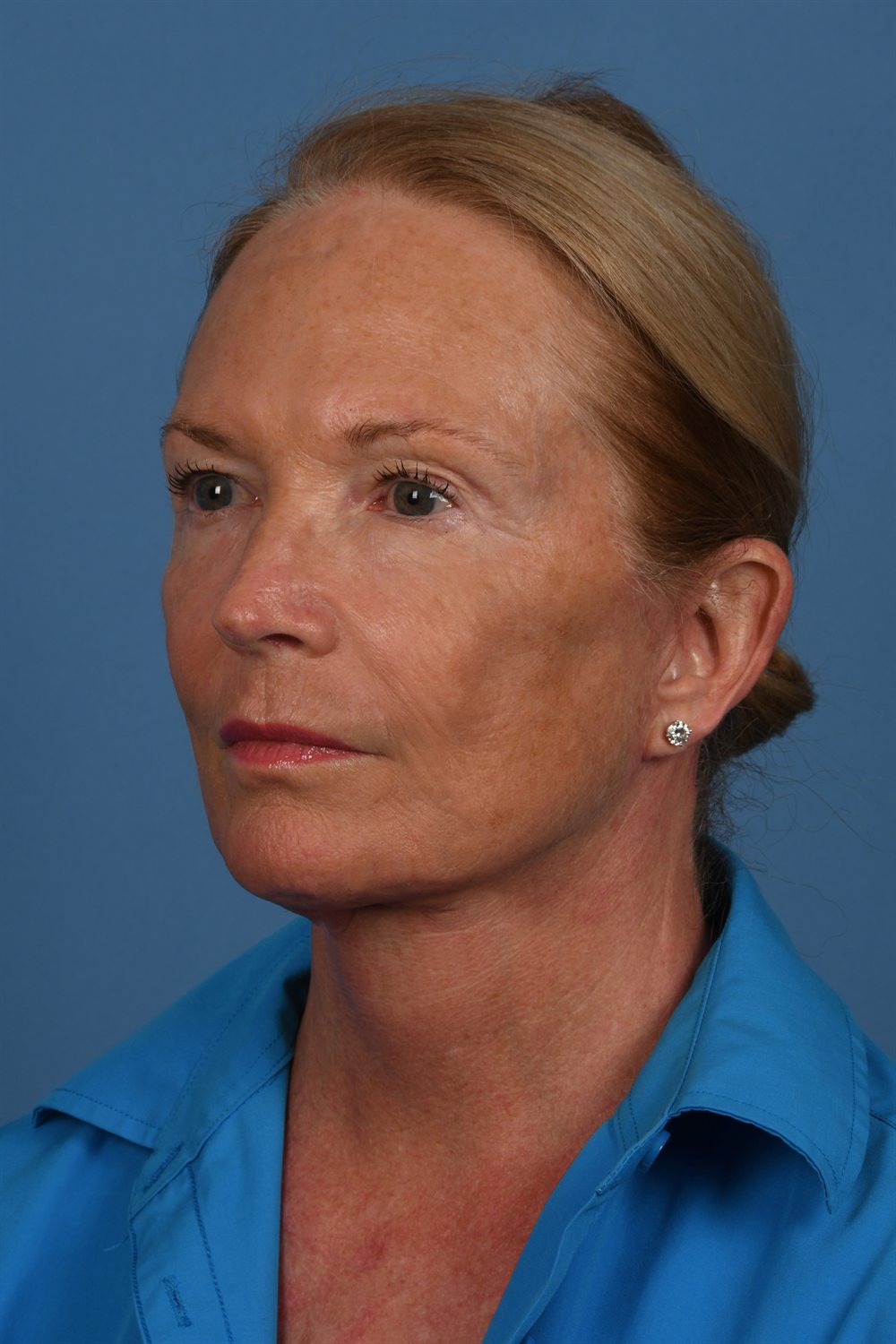
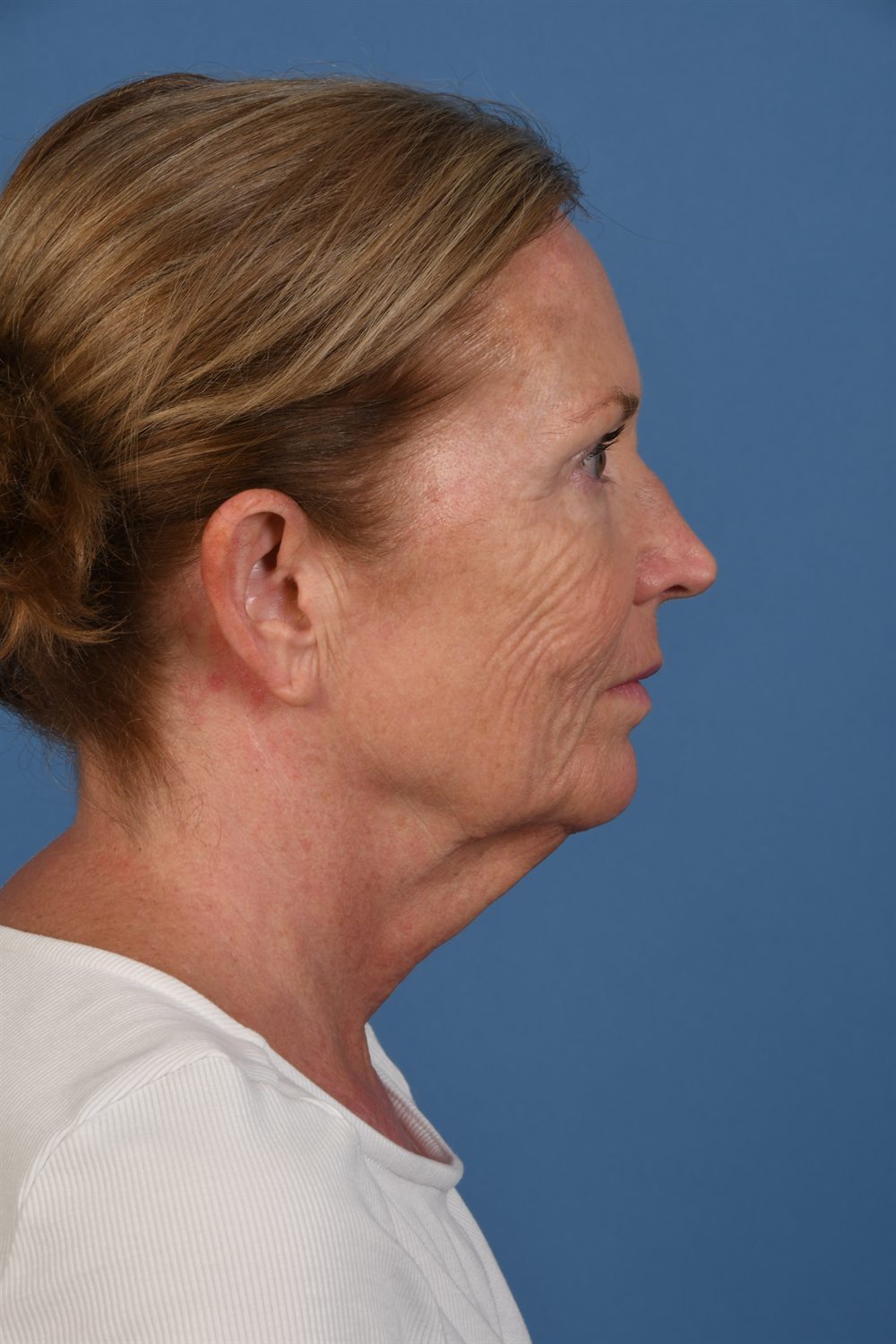
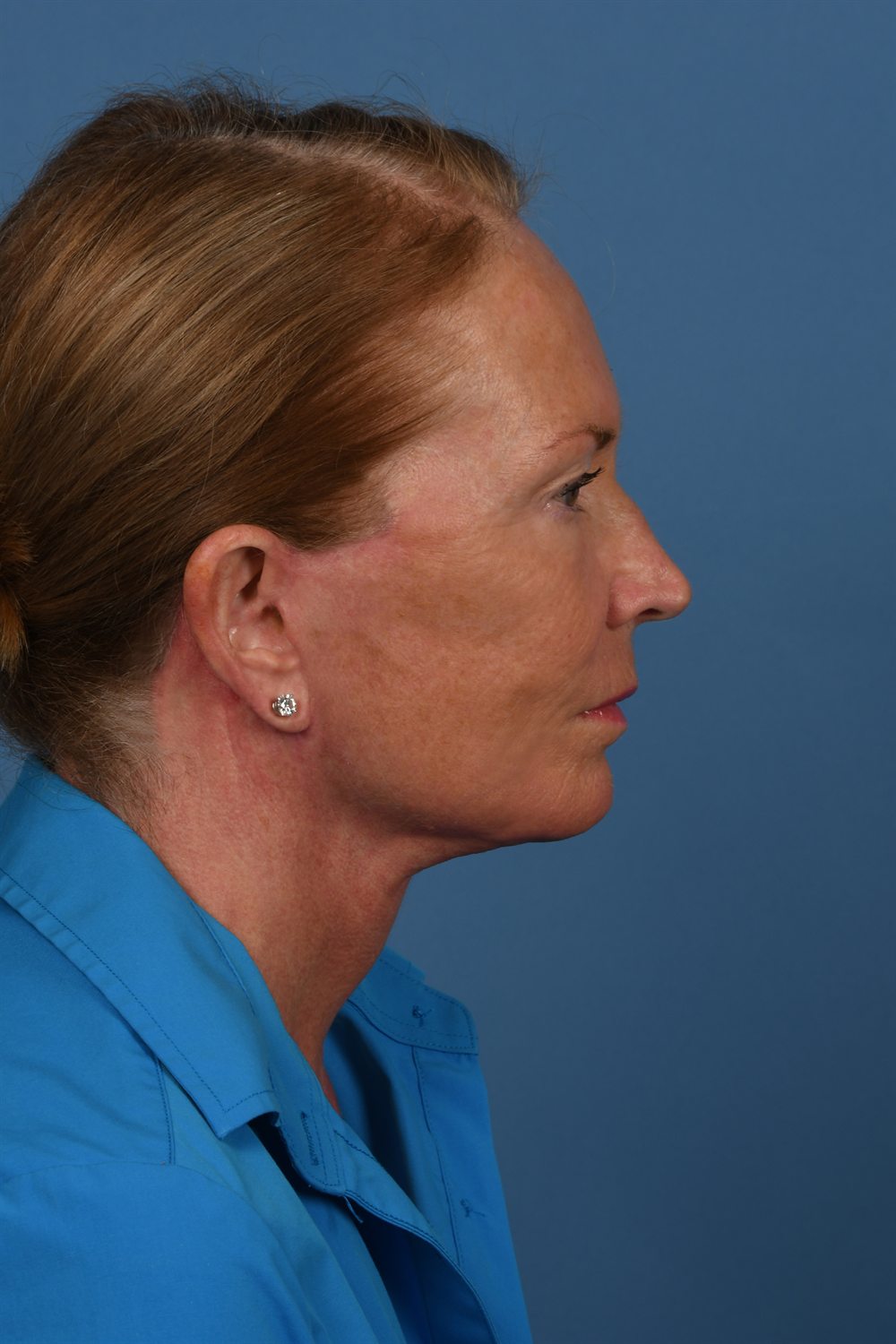
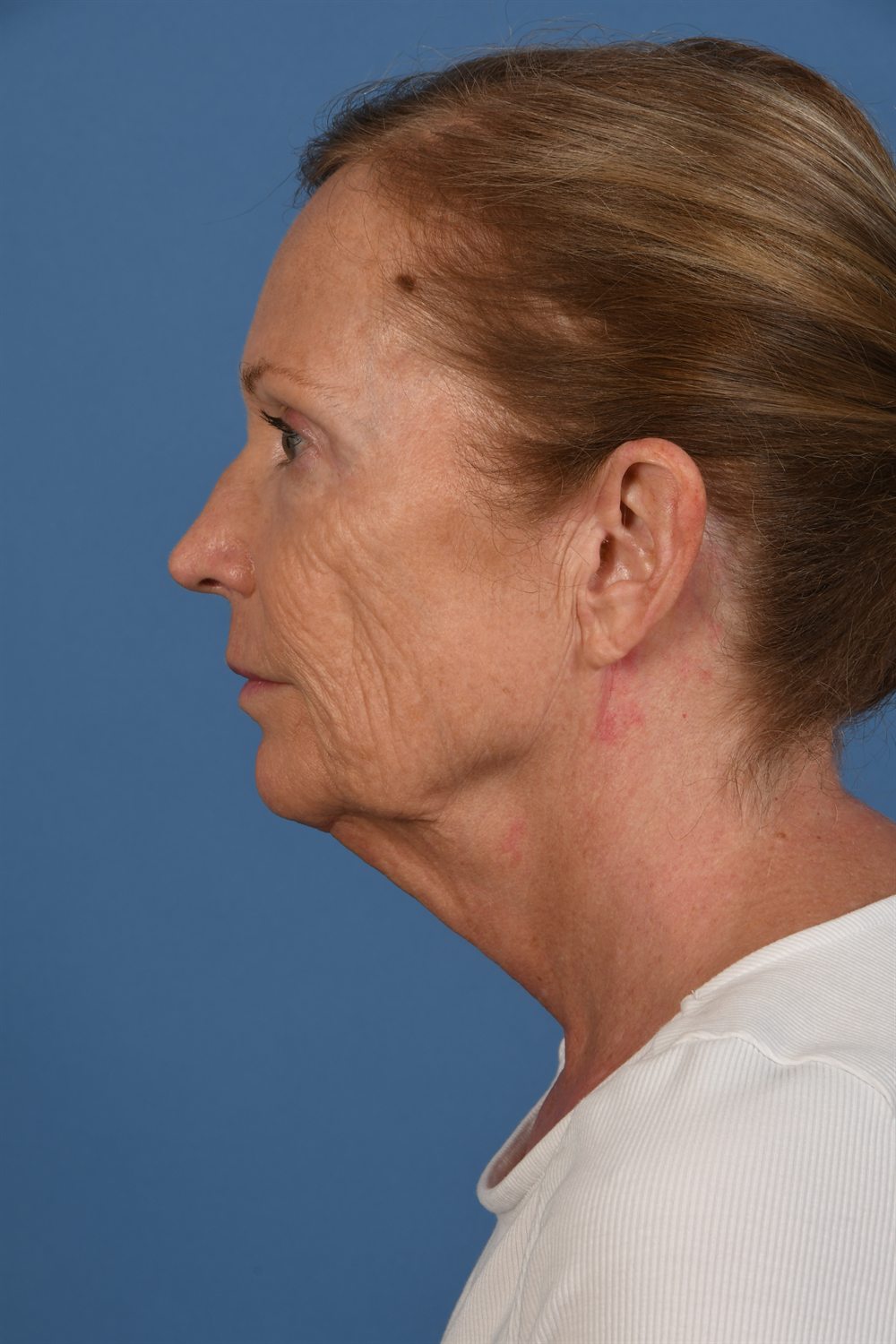
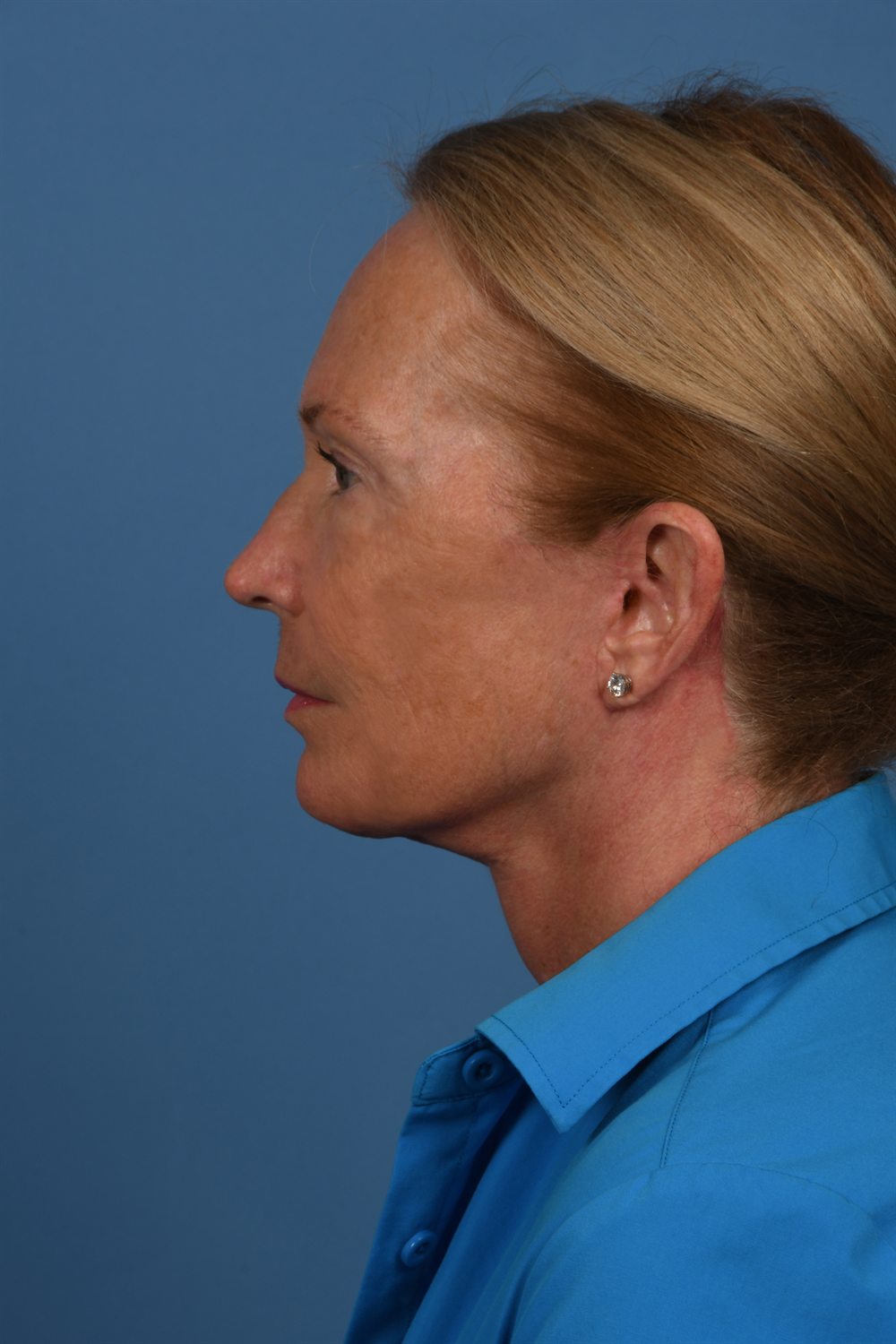
Individual results vary. Photographs are shared with the patient’s permission.
The surgical plan
The layers of the face
Skin
Subcutaneous fat
SMAS & platysma
Deep plane
Muscles of expression & bone
Simplified educational illustration, not to scale.
01
The SMAS (superficial musculoaponeurotic system) is the fibrous, muscular layer that supports the skin and fat of the cheeks and jawline. In a deep plane facelift, Dr. Alameddine dissects beneath this layer and releases the retaining ligaments that tether it, so the tissues can move together as one unit.
For this patient, the SMAS was dissected, elevated, and resuspended in a higher position. Because the lift is carried by the deeper layer rather than the skin, the skin can be redraped without excess tension—one reason a deep plane approach can help avoid a pulled or windswept appearance.
02
The platysma is the thin sheet of muscle in the neck, and it continues upward into the SMAS. In her deep neck lift, the platysma was dissected and suspended higher, which helps define the angle between the neck and the jawline.
Working beneath the platysma allows the surgeon to address deeper sources of neck fullness that a skin-only procedure cannot reach.
03
The submandibular glands sit just below the jawline. In some people they become more prominent with age, creating fullness under the jaw that can remain even after the skin and muscle have been tightened.
Resection of this gland fullness was part of her plan to achieve a cleaner line beneath the jaw. It is a specialized step that is appropriate only for selected patients, and its benefits and risks are discussed in detail at consultation.
A guided look
The angle between the neck and jawline is more defined, and fullness beneath the chin and jaw is reduced.
The jawline reads as a continuous line, with a smoother transition from the cheek to the lower face.
Her features look refreshed while her proportions and expression remain her own.
Natural movement when she smiles, without a tight or overdone look.
Our approach to sharing results
How to read any before-and-after
01
Matching conditions. The same angle, lighting, distance, and expression before and after.
02
More than one view. Profile and three-quarter views reveal the neck and jawline in a way a front view cannot.
03
The details of the operation. Knowing which procedures were performed explains what changed, and why.
04
Still the same person. A good result should look refreshed, not different.